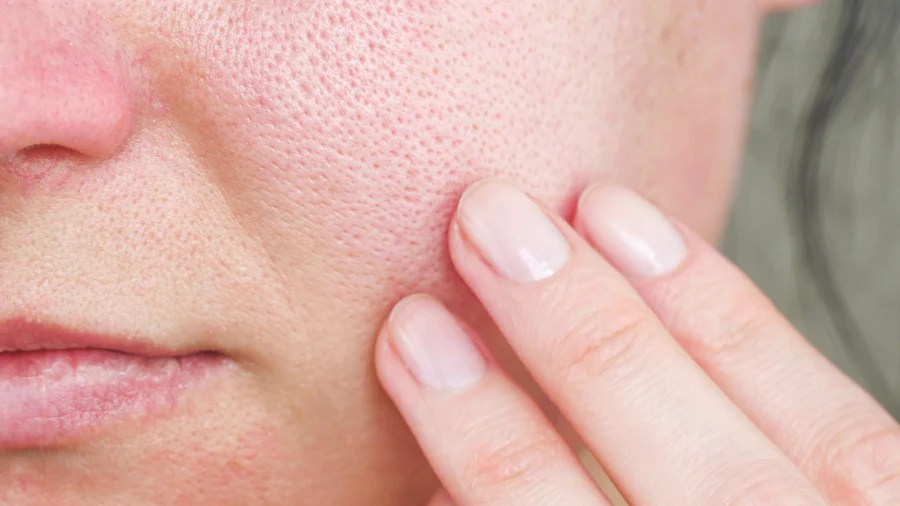
We didn’t order splotches of redness, yet it occasionally arrives on our proverbial doorstep, nonetheless. The absolute cheek of it, pun intended. Truth be told, there are many, many reasons for a flurry of facial redness: perhaps you over-exfoliated, have had an allergic reaction, or overdone the sunshine sans SPF (tut tut!).
A stint of erythema (read: nerdie term for redness) could even signal an underlying skin condition. Rosacea is a common inflammatory skin disorder that affects a mahoosive 1 out of 10 hoomans in the UK. Typical symptoms? Facial flushing and redness; alongside other red-hued skin ailments like dilated capillaries and acne.
Those with atopic dermatitis, aka the most common type of eczema, cite red rashes as a symptom of the skin condition – as well as dryness and the urge to itch. It’s super common in mini hoomans but you can suffer from the disorder at any age.
Your redness could even signify that you have skin sensitisation: when your skin barrier becomes weakened by a trigger such as the weather, stress, or skincare products. But don’t worry – it’s a skin condition that passes as quickly as it crops up when you’re equipped with the right skincare know-how.
While identifying the cause of your redness will help to prevent further flare-ups, it does little to soothe the present inflammation. But how do you care for red skin? I’m of the opinion that you’ll need an arsenal of protective, soothing, and replenishing ingredients to reduce facial redness and calm irritation.
More nerdiness: Skincare for Dehydrated Skin
Cleansing
Keep it gentle, keep it simple. Bombarding your red skin (maybe it’s a little sore, too?) with a treatment cleanser won’t alleviate the redness but only make it more inflamed. Instead, strip your skincare regimen back and reach for a gentle, nourishing cleanser that’ll remove any makeup, sebum, pollutant particles, and SPF without upsetting the delicate pH balance of your skin.
The Skingredients PreProbiotic Cleanse contains oligosaccharide, a skin-soothing prebiotic, and lactobacillus, a dairy-free probiotic which boosts the skin’s natural moisturising factor. Both balance and care for our microbiome, our skin’s ecosystem of bacteria, to bolster our skin barrier and defend against external aggressors. It also contains gluconolactone, a polyhydroxy acid, which gently exfoliates and acts like a humectant to draw moisture into skin.
Now, let’s show your body the same love. Our body skin can just as easily get red, sore, and inflamed yet we don’t give it as much attention as our faces. The Seavite Revitalising Shower Gel contains organic Ireland seaweed extracts which has anti-inflammatory properties that can heal and bring down redness in those with rosacea or acne.
Nerdie tip: don’t have the water temperature too high when you’re in the shower or bath. The humidity in the air will draw moisture from skin through a process called trans epidermal water loss. In essence, this means hot showers (however satisfying!) can exacerbate any redness and cause dehydration.
Soothe, Restore & Protect
A compromised skin barrier could be the underlying cause of your redness. Many triggers – like stress, over-exfoliation, the weather, airborne allergens – can weaken our lipid bilayer (aka skin barrier) to the point that it becomes permeable. In fact, hoomans with rosacea and acne often struggle with a weakened skin barrier function, too. In essence, a permeable skin barrier makes it much easier for irritants to penetrate skin and wreak havoc which causes inflammation and irritation (hello redness!). That’s why a soothing skin regimen that’s made up of barrier-repairing, hydrating, and anti-inflammatory ingredients is the key to calming redness.
 myskinkare.ca
Leave a comment